
Michigan Public Records
Michigan public records cover a wide range of government documents held by state and county agencies. You can search court cases, criminal history files, property documents, vital records, and much more through official online databases or by visiting local offices. This guide walks you through the main sources for Michigan public records and how to access each one.
Michigan Public Records Overview
Michigan Public Records and FOIA Law
The Michigan Freedom of Information Act governs how you can request public records from state and local government agencies. The law is codified at MCL 15.231 et seq. It states that all people, except those incarcerated in state or local correctional facilities, are entitled to full and complete information about the affairs of government. You do not need a reason to request records. You do not need to be a citizen or resident. Any person can make a FOIA request under this law.
Under MCL 15.232, a public record is any writing that a public body prepares, owns, uses, or retains while doing its official work. This definition is broad. It covers emails, meeting minutes, permits, contracts, inspection reports, court filings, and thousands of other document types held by state and county offices. Michigan courts, school districts, state agencies, and local governments all must respond to valid FOIA requests.
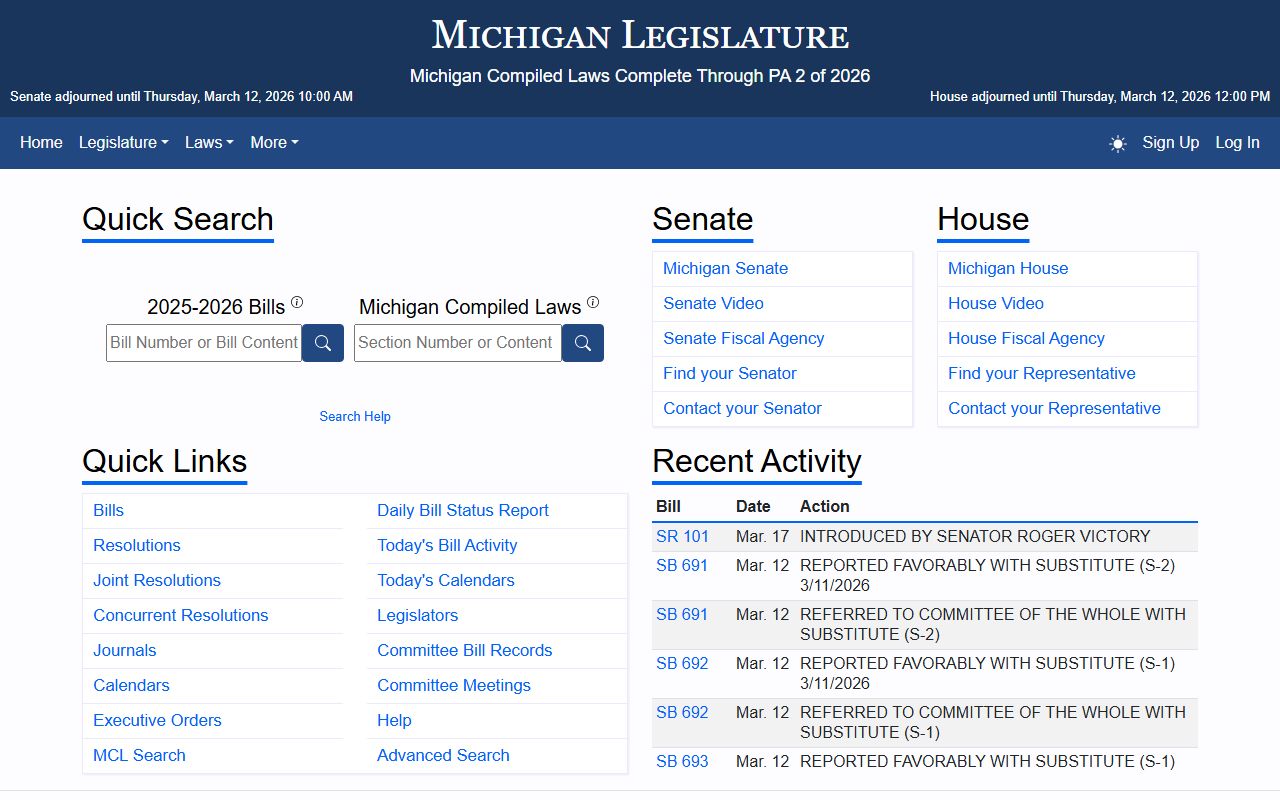
Agencies must respond within 5 business days under MCL 15.235. They can extend that deadline by up to 10 additional business days if needed, but they must notify you in writing. Fees are capped at 6 times the state minimum hourly wage for labor costs, plus the actual cost of copies. People with low income who receive public assistance can request a fee waiver under MCL 15.234. If you send your request by email, it is considered received the next business day.
Note: Each agency has a FOIA Coordinator required by MCL 15.236. Contact them directly to ask about forms and how to submit your request for that specific office.
Michigan Court Records Search
The Michigan Courts One Court of Justice system gives you online access to case information across courts statewide. You can search at micourt.courts.michigan.gov by party name, case number, or attorney bar number. The portal covers civil, criminal, traffic, and family cases. It shows party names, docket entries, case status, and scheduled hearings at no cost. Not every court in Michigan participates, so some records may require in-person access at the local courthouse.
Michigan Court Rule 8.119 holds that court records are presumptively public. Courts may restrict access only when a statute, court rule, or court order specifically requires it. Juvenile cases, adoptions, mental health proceedings, and personal protection orders are among the record types that do not show up in public search results. Also, as of April 1, 2022, dates of birth were removed from public case records under MCR 1.109 to protect personal data.
To look up court records in person, visit the clerk's office at the courthouse in the county where the case was filed. Staff can search by name or case number and make certified copies for a fee. Most circuits charge $1 per page for copies and $5 to $10 per document for certification. Call ahead to confirm hours and what ID or payment they require.
Criminal History Records in Michigan
The Michigan State Police maintains the state's criminal history database through its Criminal Justice Information Center. The public can access this through the Internet Criminal History Access Tool, known as ICHAT, at apps.michigan.gov/ICHAT. The fee is $10 per search. ICHAT returns results for felony convictions and serious misdemeanors punishable by more than 93 days. It covers arrest records for those same offense types across all 83 Michigan counties.
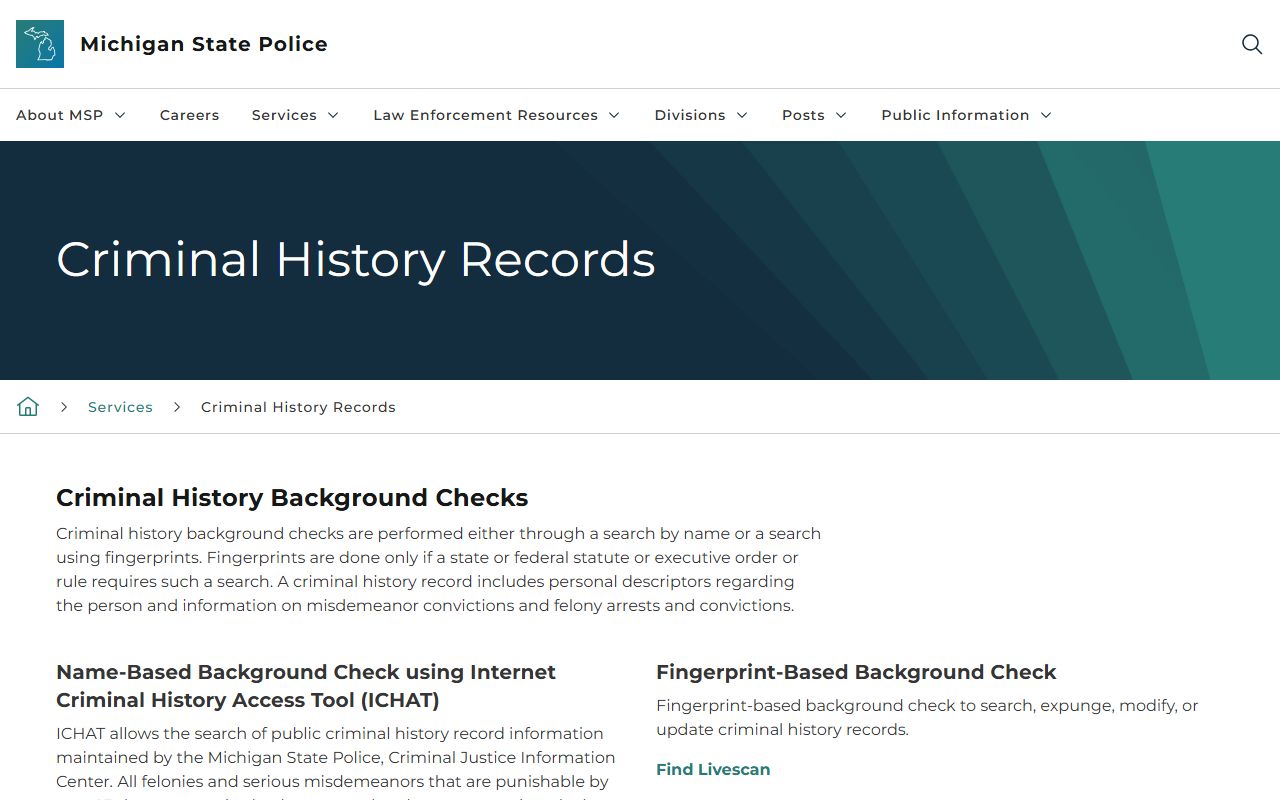
ICHAT does not include federal records, tribal records, traffic violations, juvenile records, local misdemeanors, or warrant information. It also does not show criminal history from other states. For a more complete background check, especially for licensing or adoption purposes, you may need a fingerprint-based check. Those typically cost $50 to $70 and are done through approved live scan vendors or local law enforcement. You can learn more about the full criminal history records program at the MSP criminal history records page.
MDOC Offender Tracking System
The Michigan Department of Corrections runs a free public database called the Offender Tracking Information System, or OTIS. You can search at mdocweb.state.mi.us by last name, first name, MDOC number, or physical characteristics. OTIS shows current prisoners, parolees under supervision, probationers, interstate compact transfers, and escapees or absconders. The data is free and open to anyone.
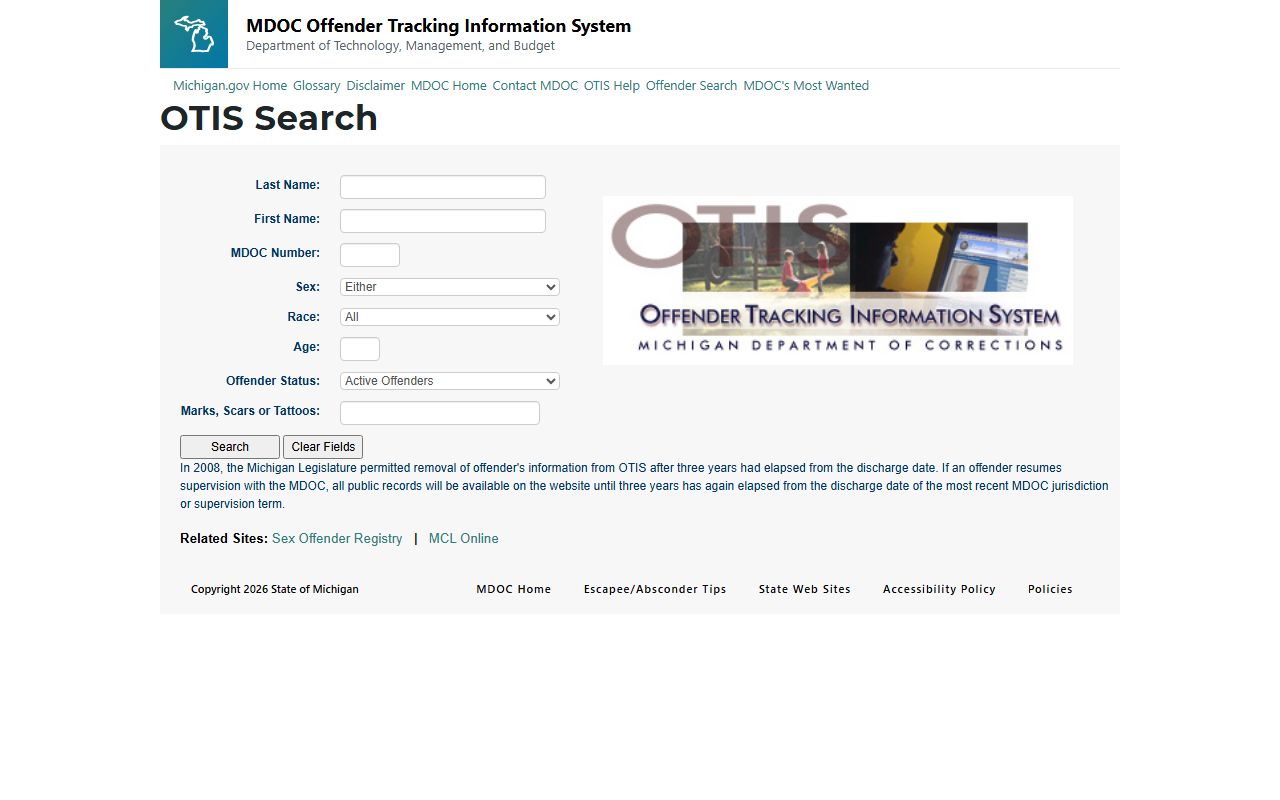
OTIS records are removed three years after an offender's discharge date. If supervision resumes for any reason, a new three-year period starts from the most recent discharge. This means not all former MDOC offenders will show up. Use OTIS to find people currently under MDOC supervision or recently released. For older conviction records, ICHAT is a better resource.
Michigan Sex Offender Registry
The Michigan State Police maintains the Public Sex Offender Registry, known as PSOR. You can search for free at mspsor.com using a name, address, ZIP code, registration number, or MDOC number. The registry shows the offender's name, aliases, date of birth, photo, physical description, home address, employer, vehicle, and offense details. You can also search by neighborhood map to see offenders near a specific location.
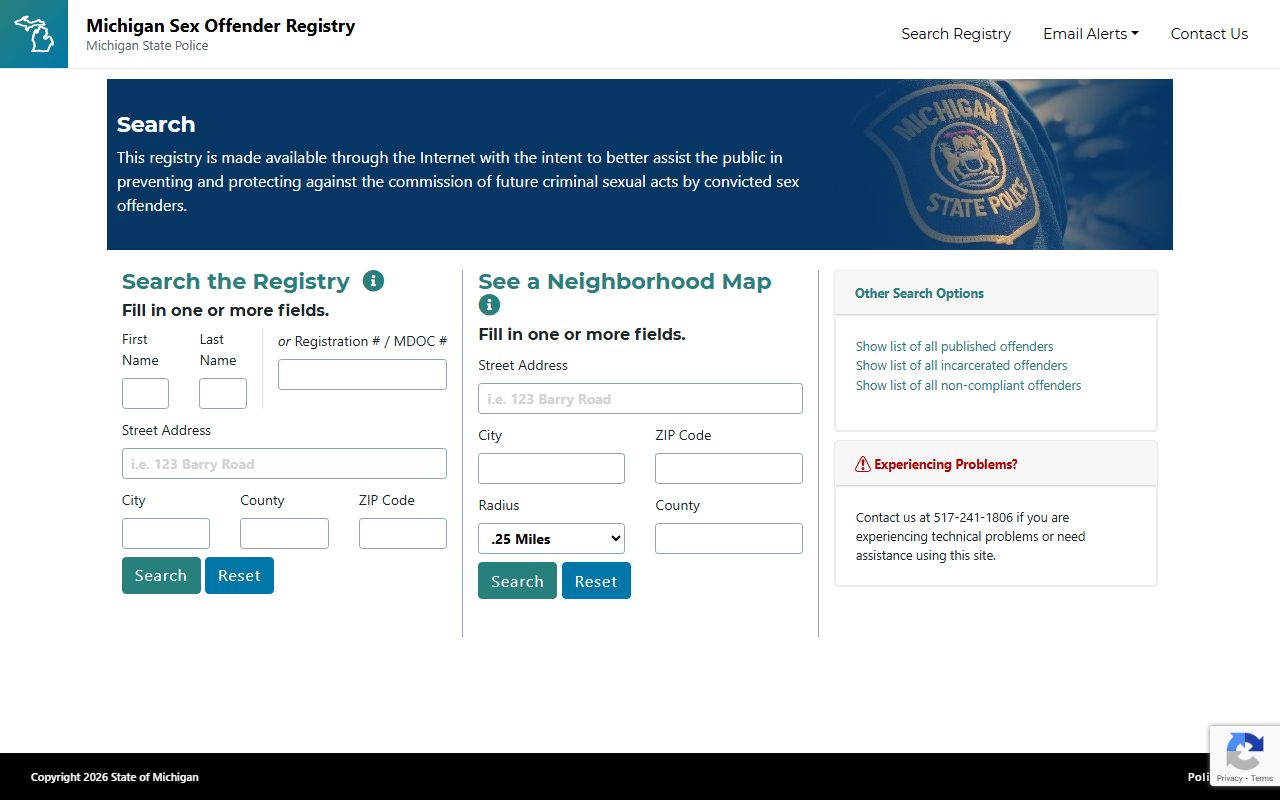
The registry includes three special lists: all published offenders, all incarcerated offenders, and all non-compliant offenders. The Michigan Sex Offender Registry Unit can be reached at (517) 241-1806, P.O. Box 30634, Lansing, MI 48909-0634. Checking this registry is a free service available to all Michigan residents and the general public.
Michigan Vital Records
The Michigan Department of Health and Human Services Division for Vital Records and Health Statistics handles birth, death, marriage, and divorce records for the entire state. You can find ordering information at michigan.gov/mdhhs. Michigan vital records go back to 1867. The first certified copy costs $34. Each additional copy of the same record costs $16. Online orders through VitalChek carry extra processing fees on top of those base amounts.
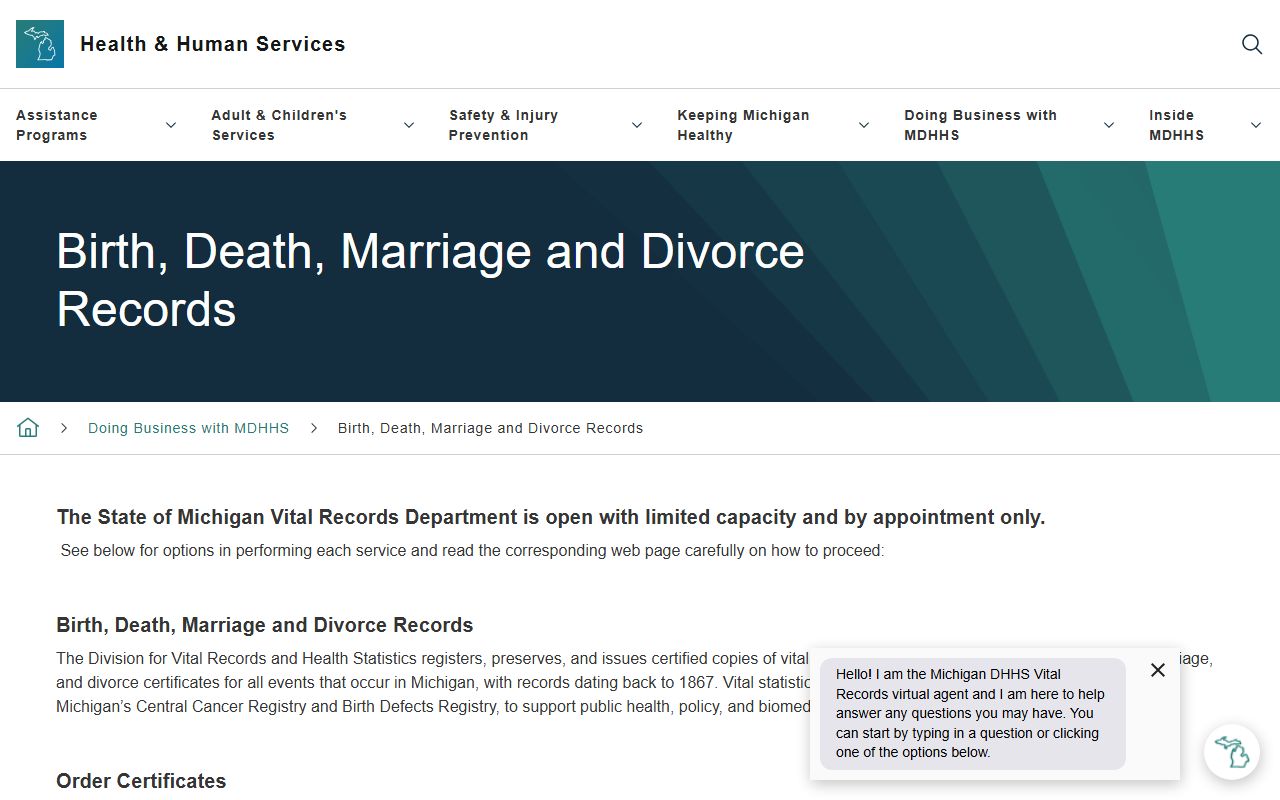
Birth records less than 100 years old are restricted. To get a certified copy, you must be the person named on the record (if 18 or older), a parent named on the record, a legal guardian, a legal representative, or an heir of a deceased person. Death, marriage, and older records are more openly accessible. You can order by mail, in person at a local county clerk office, or online through VitalChek. The state office is at 333 S Grand Ave, Lansing, MI 48933 and can be reached at (517) 335-8666.
Note: County clerk offices can also provide certified copies of birth, death, and marriage records for events that occurred in their county. Fees and availability vary by location.
Secretary of State and Property Records
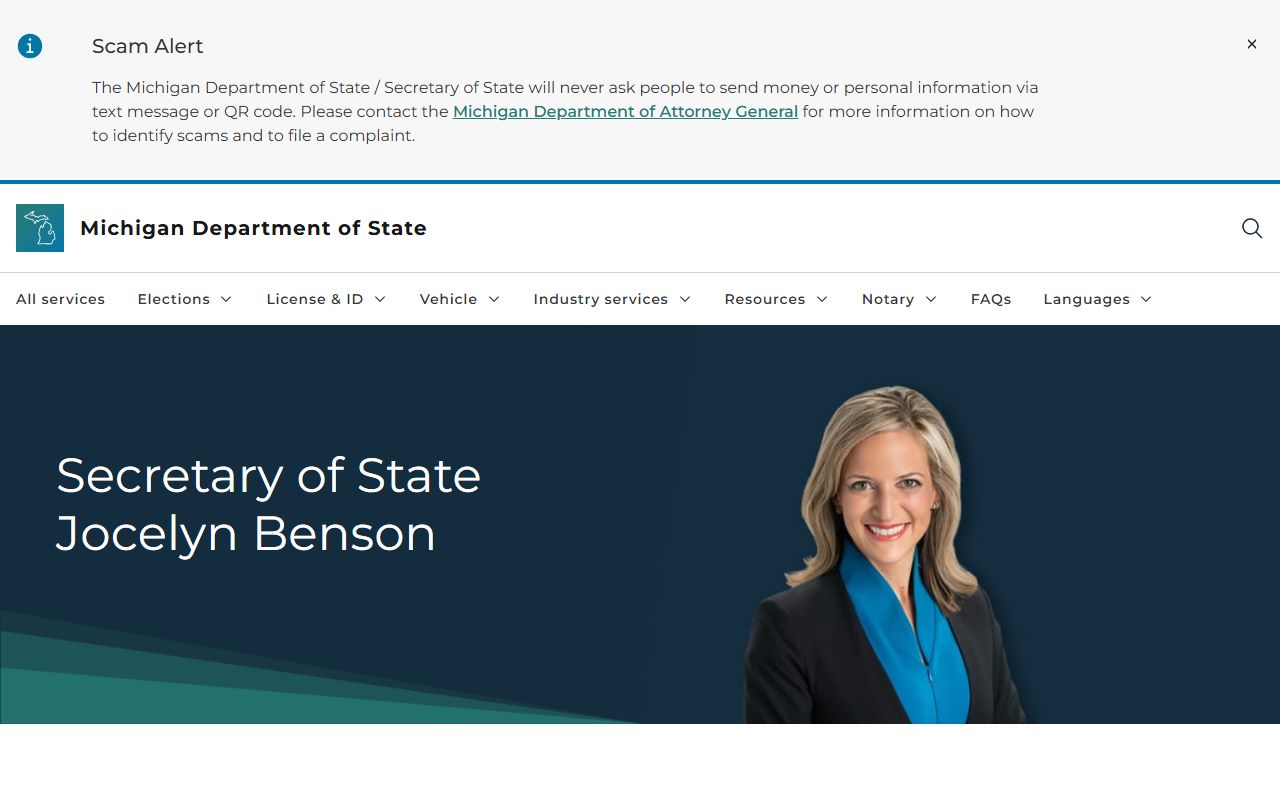
The Michigan Secretary of State maintains driver and vehicle records for the state. To request a driving record or vehicle registration lookup, you use Form BDVR-154. The fee is $11 per record lookup, with a $1 certification add-on. You can submit in person at any Secretary of State branch, by mail, or through the online services at michigan.gov/sos. Records include driving history, vehicle registration, and license plate information. An abandoned vehicle search tool is also available for free on the same site.
Property records in Michigan are kept by the Register of Deeds in each of the 83 counties. These offices record deeds, mortgages, liens, easements, plats, and other real estate documents. Most counties offer online search portals that let you look up records by name, parcel number, or address. Fees for copies are typically $1 per page, with a $5 certification fee. The Secretary of State also handles statewide UCC filing searches, which you can access through the business filings section at michigan.gov/sos.
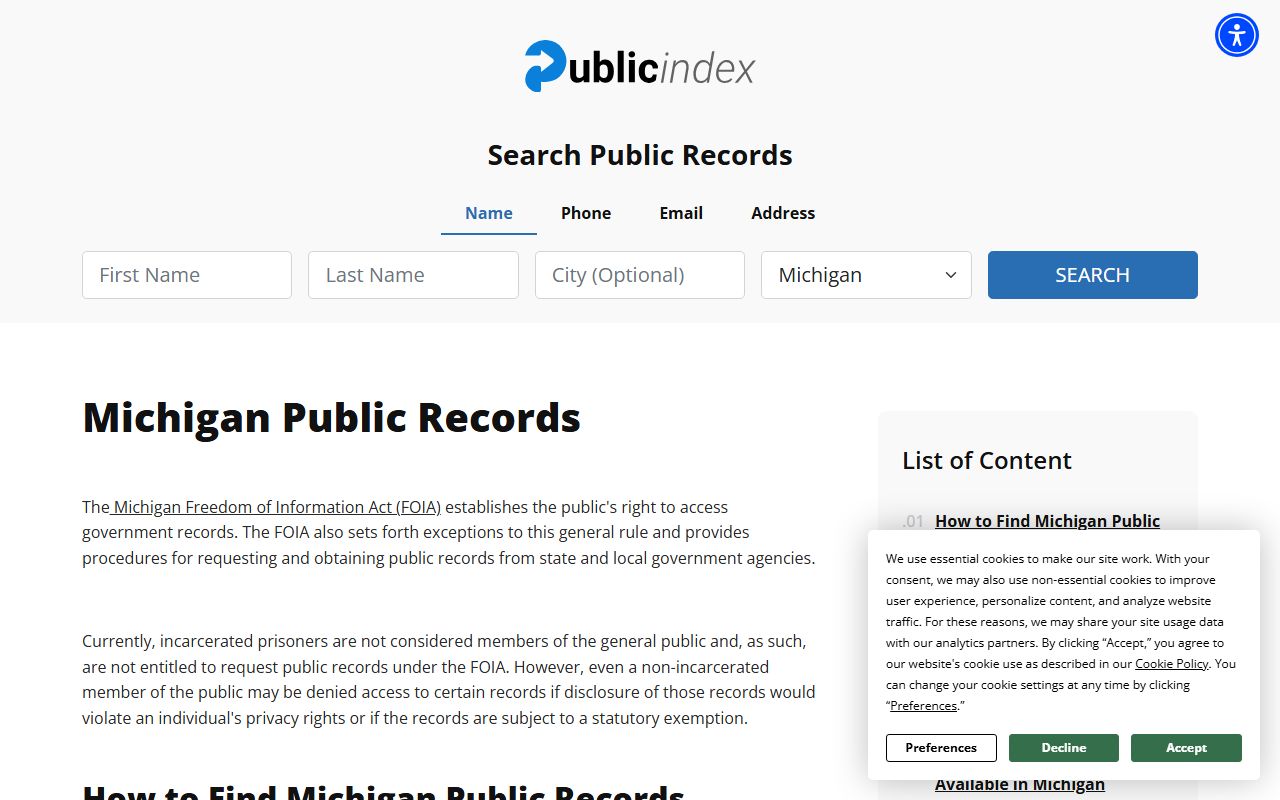
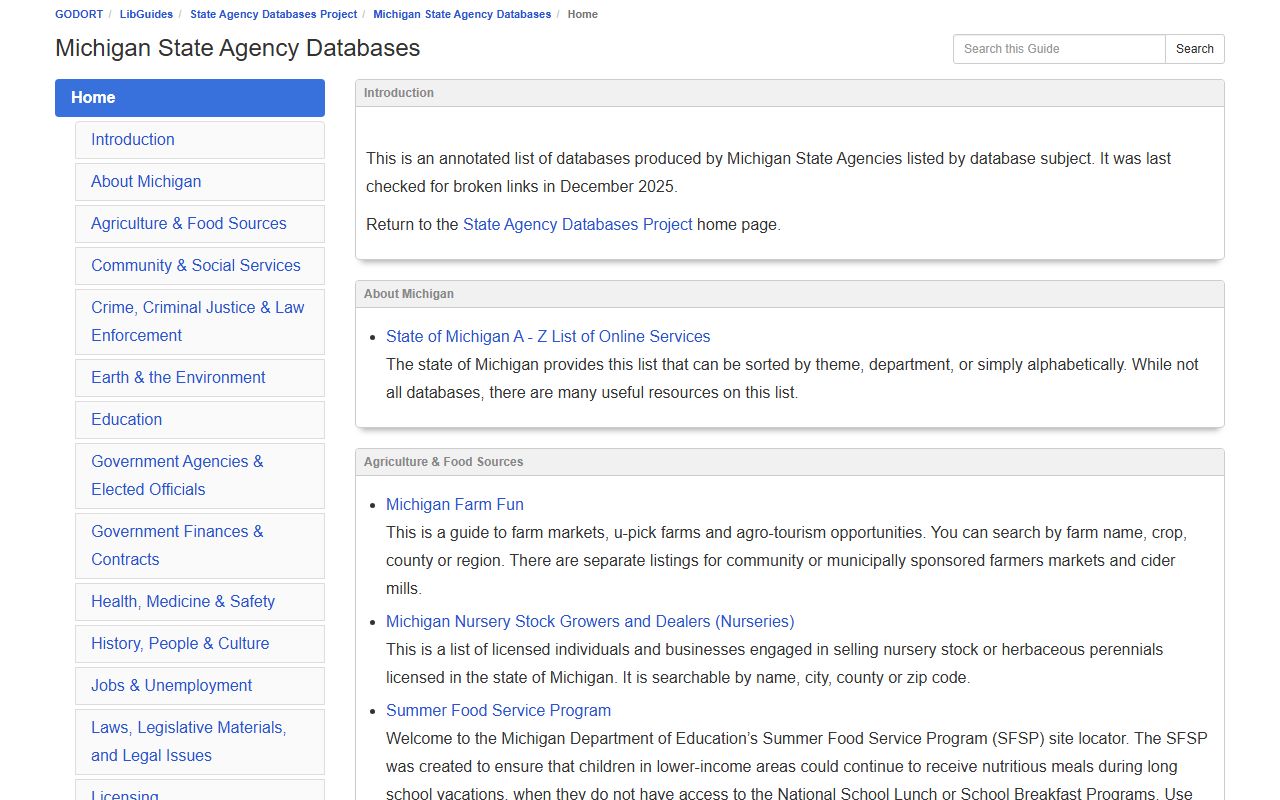
For a broad overview of Michigan government databases, the Michigan Public Records Directory at michigan.thepublicindex.org lists dozens of state agency databases and portals. You can also browse the Michigan State Agency Databases guide maintained by government document librarians for a deep look at official record sources.
Open Meetings and Government Transparency
Michigan's Open Meetings Act, codified at MCL 15.261 et seq., requires public bodies to hold their meetings open to the public. Meetings must be announced in advance, and minutes must be kept and made available. The minutes are public records that you can request at any time. Closed sessions are allowed only for specific reasons spelled out in the statute, such as attorney-client discussions or certain personnel matters.
Meeting minutes, agendas, and supporting documents from Michigan state agencies, county boards, city councils, school boards, and other public bodies all fall under FOIA and Open Meetings rules. Many agencies post these documents on their websites. If you cannot find what you need online, submit a FOIA request directly to the agency's designated FOIA Coordinator. Response times are the same 5-day standard that applies to all public records requests under MCL 15.235.
Browse Michigan Public Records by Location
Public records in Michigan are maintained at both the state and county level. Each of Michigan's 83 counties has its own courthouse, Register of Deeds, and county clerk's office. Select a county or city below to find local resources for public records in that area.
Michigan Counties
Each county maintains court records, property documents, vital records, and FOIA-accessible files through local offices. Browse a county below for specific contact details and online search portals.
Michigan Cities
Major Michigan cities have their own public records resources in addition to county offices. City clerks handle FOIA requests, vital records, and municipal documents. Select a city for local details.